
Why Framing Devices?
Dear writers,
It is spring of 2017. I’m in the reading room of the Bibliothèque historique de la Ville de Paris sifting through a set of un-inventoried archive boxes sold to the library in 1897 by the protagonist of my PhD dissertation. The boxes hold a collection of documents, letters, and drawings related to the history of aerial navigation in the eighteenth and nineteenth centuries – including, most fantastically, sketches and patents sent by would-be aerial inventors from all over the world. Amongst them, out of place, a page of thicker, modern paper stock stands out. My eye catches upon the letterhead, “Computing Devices of Canada Limited.” This is the name of the company that my maternal grandfather George Glinski co-founded in 1948.
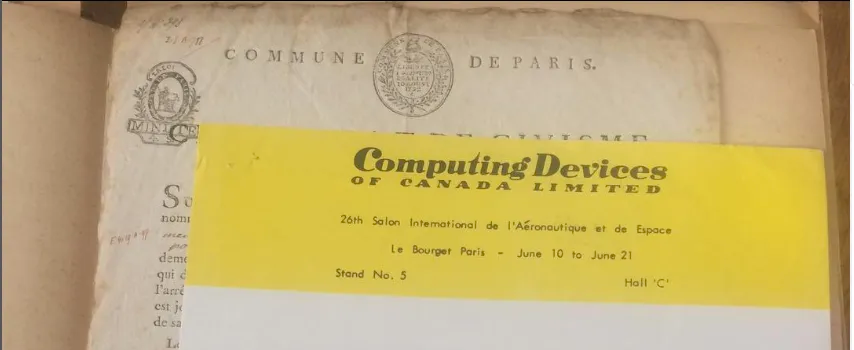
The misplaced page is a press release for a new product announced at the 26th Salon International de l’aéronautique et de l’espace in Le Bourget, Paris in 1965. The advertised system was called an “electronic situation display,” a lightweight navigation display system to be used in helicopters or ships. By this point, George had already left the company to join the department of electrical engineering at the University of Ottawa. But “microminiaturization” remained George’s research obsession. His work in computer engineering at the University of Ottawa was described in one article my mom sent me as “developing electrical circuits invisible to the naked eye” that “may produce tomorrow’s computers” that were to be “no larger than a cigarette package.”
***
Sitting down years later to come up with a moniker for my editing business (with a computer no larger than a cigarette package in my hand), this encounter flashed to mind. The strange juncture between this piece of paper and the files it was hidden amongst pointed me towards the range of stories and scholarly arguments that could be made with these materials. This episode reminds me of what are, to my mind, some of the great joys of academic research: being surprised by your own materials, or, being (pleasantly) forced to connect things you previously imagined separate or distinct.
***
By now, you might have realized that I’ve borrowed the second word “devices” from the name of George’s company. The word “Framing” comes from the other side of the family, my paternal Grandère Maximé Doucet’s very to-the-point “MJ Doucet Custom Picture Framing and Woodworking.” Max didn’t bother much with fancy titles or extra words, but his ethos remained clear. In his (borrowed) words: “quality does not cost, it pays.”
I’ve combined the Framing (🖼️) from Max and the Devices (💻) from George to create Framing Devices, the home for all my editorial work (🛠️). The marriage of these two words captures my intentions as a developmental editor: to help academic authors tell great stories, or, in more academic terms, to make excellent, incisive arguments.
I’d love to hear about why you research what you do! And, if you’d like to work together to make progress on your writing goals and deadlines, please do get in touch.
Sincerely,
Emily