
Sticky notes heal all wounds, or, how to analyze your peer review reports
Dear writers,
Many of you are working towards publishing an academic book. Maybe you are gearing up to pitch your project to an academic press, anxiously waiting to hear back from an editor about peer review reports, or working to integrate feedback from those reports into your manuscript. Each stage of the publishing process comes with its attendant anxieties. I know because I am currently going through this process myself.
I received positive peer review reports on my first book manuscript from my editor in mid-March. However, I had to supply a response letter before he could request a contract from the editorial board. This is a strange document because you are responding to the peer reviewer’s feedback but addressing the letter to your editor. However, the real audience is the press’s editorial board, who will review the document as part of their decision about whether or not to offer you a contract.
While I had seen examples of this type of document in working with clients, this was the first time I had written such a document myself. I reached out for advice; I went for a walk with a trusted mentor, asked a friend to take a look at their response letter, and I re-read Ch. 13 of Laura Portwood-Stacer’s essential resource The Book Proposal Book (you can find a generous free version of her template for responses here).
What I did next was more informed by my work as a developmental editor than my experience as an author.
At first glance, the reports appeared to contradict each other (something my editor noted and gave me some helpful advice on). One reader suggested that the manuscript was too densely packed with information and the second wanted me to add another line of argumentation.
I decided to analyze the peer review reports by categorizing the feedback without distinguishing between the two reviewers to find a unifying thread. I summarized each key comment on a sticky note in Miro and organized them into thematic rows – including positive feedback on style, methodology, and content and constructive criticism on style, structure, theory, and methodology. I listed all the references, small corrections, and suggested cuts at the bottom of my grid.
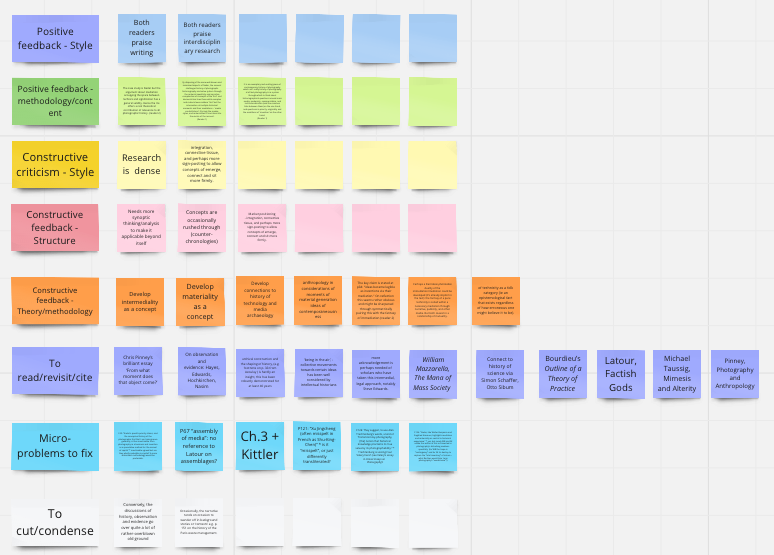
Abstracting the feedback from the reports themselves (and putting the ideas in my own words) revealed several shared areas of critique across the two reader reports. This process also allowed me to understand the structural implications of the reviewers' content-based feedback. I used these insights to structure my response letter, outlining a detailed revision plan for the manuscript and describing how I would effectively address the concerns outlined in the reports.
What happened next?
Well… I am very excited to be able to share that my book, Inventing Nadar: A History of Photographic Firsts is forthcoming from Duke University Press sometime in 2026.
Next month, I’ll share how I transformed my analysis of my peer review feedback into a detailed revision plan.
Sincerely,
Emily
P. S. I do this kind of analytical work for my clients all the time. If you are sitting on peer review reports and wondering how to integrate this feedback into your manuscript, consider reaching out for support! I’d love to hear from you.